
Our Thesis, v1.0
There is now a machine in the middle of how we know, share and decide. Whether it serves or encloses society is being contested.
The Moment
Every leap in human progress has followed a change in how information moves through society. Writing let a story outlive its teller. Print let one idea reach many. The web let everyone speak to everyone. Each time, everything downstream changed: how we understand the world, how we decide, what we are able to solve.
We are in the foothills of the biggest change yet. An information ecosystem mediated by AI is becoming the epistemic infrastructure of society: how it knows what it knows, what it holds in common, and what it acts on. That infrastructure is being built now, and whether it serves society or encloses it is still open.
The Shift
For as long as people have recorded what they know, the audience has been another person. Now the first reader of most information is a machine, and soon the last reader may be one too. This is the first shift with a machine in the middle, and everything built for a human reader, from how trust is earned to how errors are caught, rests on an assumption that no longer holds.
The Stakes
Our information ecosystem runs on norms we never had to encode: how we know what is true and where it came from, how we see the same version so we can disagree about the same thing, how new knowledge is found and its finders rewarded. We had working answers, from the scientific method to the newsroom correction to the stable artefact everyone could cite. None is native to a machine. The emerging system is borrowing from the last one, and that cannot last.
Built natively, it could do better: more people knowing more about the same world, and deciding better on it. That is the prize.
Where we begin
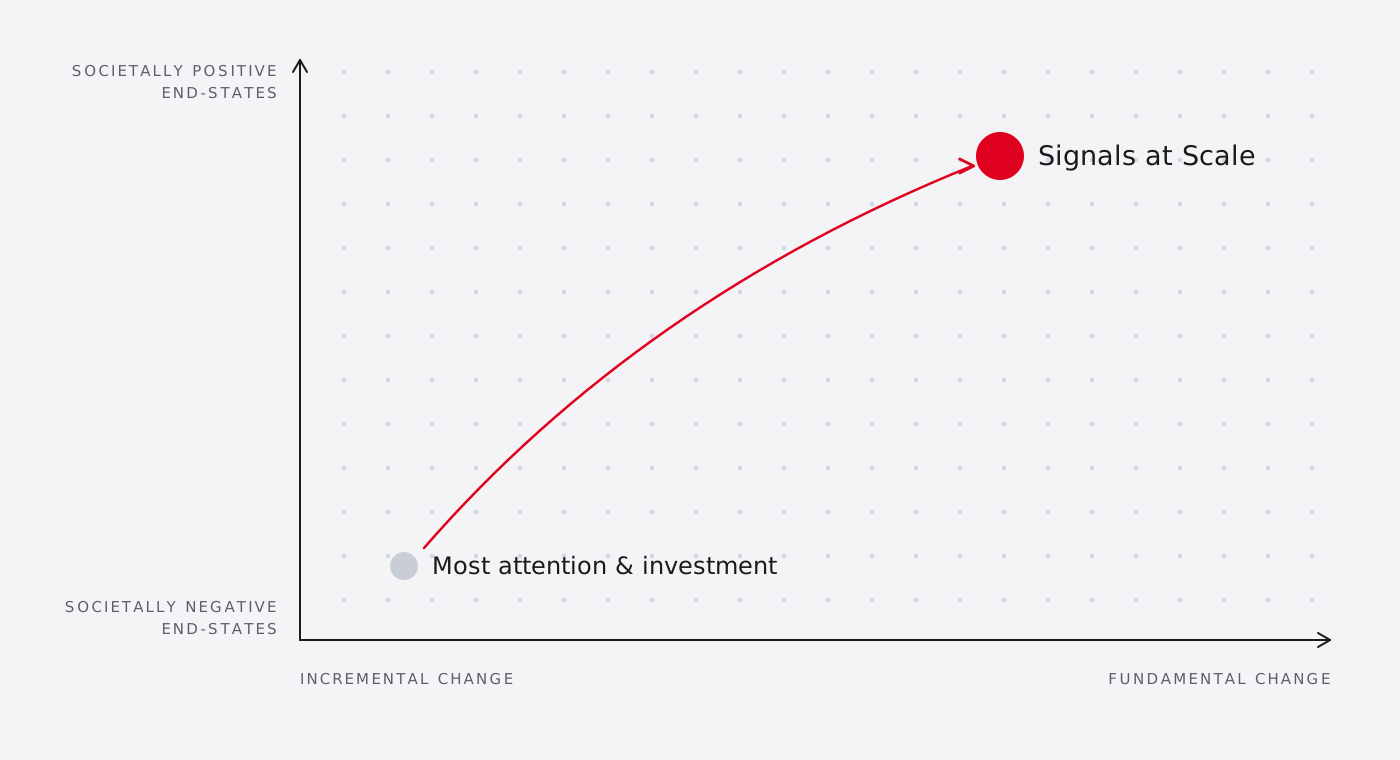
Our research found that value in this ecosystem will be created everywhere but captured close to the consumer. The layers that matter most, deciding whether information is true, where it came from and whether we share a version of it, have slower, more diffuse returns, so the market won't build them first. Yet everything else stands on them.
So Signals at Scale backs builders of machine-native information infrastructure: the parts an AI-mediated ecosystem depends on, that the market won't build first. We work from a view of the whole ecosystem to find the keystone problems, the ones whose solution makes the next layer buildable, and we begin with the unit of information itself.
This thesis comes out of our research. Read the report.